
Wildebeest Calving Season in Serengeti: January & February Guide
 Wildebeest Calving Season in Serengeti: January & February Guide
The Serengeti calving season January is one of the most spectacular wildlife events on the planet. Each year, hundreds of thousands of wildebeest gather in the southern plains of Serengeti National Park, particularly around the Ndutu and southern Serengeti regions, to give birth to their calves. This event is not only a vital stage in the great wildebeest migration but also a unique opportunity for travelers to witness the raw realities of life and survival in the wild. For safari enthusiasts, understanding the Serengeti calving season January provides insights into timing, wildlife behavior, and how to maximize sightings during this dramatic period.
What Happens During the Serengeti Calving Season January
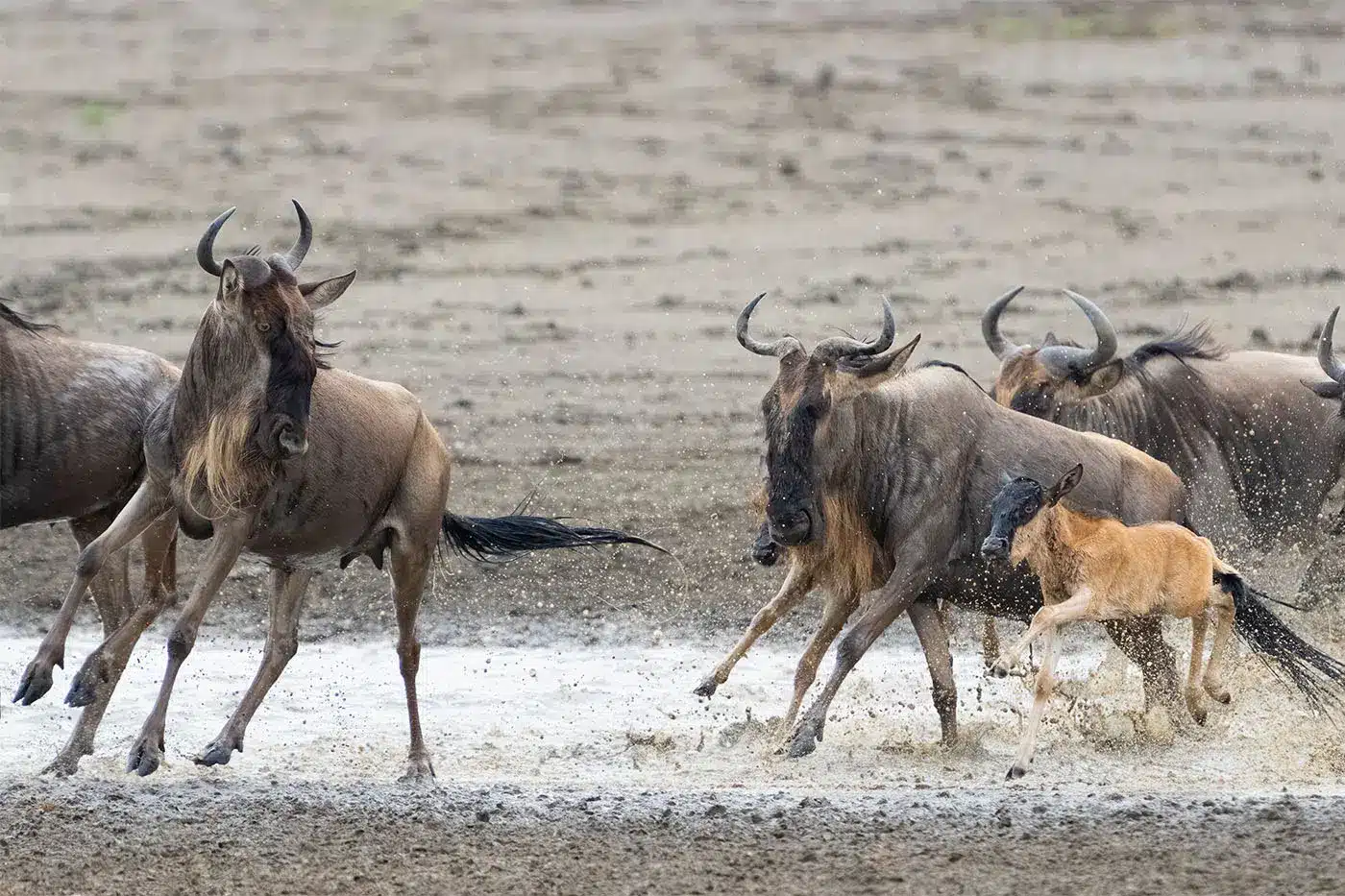
During this period, the southern plains become a vibrant nursery. Wildebeest gather in massive herds, giving birth to thousands of calves within a concentrated window of a few weeks. This synchronized calving is a survival strategy: the sheer number of newborns overwhelms predators, ensuring that a high proportion of calves survive. Visitors can observe newborn wildebeest tentatively standing on wobbly legs, nursing from their mothers, and gradually learning to keep pace with the herd.
Predators are naturally drawn to the concentration of vulnerable young. Lions, cheetahs, leopards, and hyenas are particularly active, offering extraordinary predator-prey viewing opportunities. This period allows travelers to witness the circle of life up close, capturing intense moments of survival, vigilance, and the delicate balance of the Serengeti ecosystem.
Wildlife Highlights During Calving Season
While wildebeest calves are the main attraction, the Serengeti calving season January also attracts other wildlife. Zebras and gazelles join the herds, and the dense animal gatherings bring predators into close view. Birdlife is abundant, with migratory species arriving to exploit the rich feeding opportunities created by the young herbivores. Elephants, giraffes, and buffalo are also commonly seen nearby, providing a full spectrum of wildlife encounters across the plains.
The open plains of Ndutu and southern Serengeti during this time offer excellent visibility for game drives and photography. The green grasses nourished by the short rains enhance the scenery, providing a striking backdrop for capturing the newborns, herds, and predators in action.
Best Ways to Experience the Calving Season
The Serengeti calving season January is best experienced with multiple game drives across the southern plains. Staying near Ndutu or the southern Serengeti provides the most consistent access to concentrated herds. Early morning and late afternoon drives are ideal for observing calving activity and predator behavior, as these times correspond with higher wildlife activity.
For those seeking a unique perspective, walking safaris with trained guides are sometimes available in specific areas, offering closer observation of the ecosystem without disturbing the animals. Photography enthusiasts benefit from using telephoto lenses to capture detailed shots of calves, predators, and herd interactions.
Tips for Visiting During the Serengeti Calving Season
Travelers should plan early, as this is a high-demand period. Layered clothing is recommended, as early mornings can be chilly while daytime temperatures rise quickly. Binoculars and cameras with zoom capabilities are essential for wildlife observation, and patience is critical—nature follows its own schedule, and moments of action can appear suddenly.
While January provides some of the best opportunities to witness new life, flexibility in your itinerary allows you to adapt to herd movements, rainfall conditions, and predator activity, maximizing your chances of experiencing the dramatic events of calving season.
Why the Serengeti Calving Season January Is Unforgettable
The Serengeti calving season January is more than just a wildlife spectacle; it is an intimate glimpse into the processes that sustain the great wildebeest migration. Observing newborns taking their first steps, predators stalking, and the dynamic interactions across the plains creates lasting memories. For travelers seeking a profound wildlife encounter, this period represents one of the most compelling and emotionally engaging times to visit the Serengeti. Witnessing life in its most raw and natural form during the calving season leaves an impression that endures long after the safari ends.