
The Complete Guide to the Great Wildebeest Migration in Tanzania
 The Complete Guide to the Great Wildebeest Migration in Tanzania
There are few wildlife spectacles on Earth as powerful, rhythmic, and emotionally stirring as the great wildebeest migration Tanzania is famous for, a natural phenomenon that unfolds across vast plains in a timeless cycle of survival and renewal. Each year, more than 1.5 million wildebeest, accompanied by hundreds of thousands of zebras and gazelles, move in a continuous loop through northern Tanzania and into neighboring Kenya, driven not by instinct alone but by the relentless search for fresh grazing and water. This migration is not a single event but an ever-moving journey shaped by rainfall patterns, predator pressure, and ecological balance, making every moment of it unpredictable and deeply compelling. For travelers seeking to witness raw nature in its most authentic form, this migration represents more than a safari highlight—it is a profound encounter with life’s persistence, struggle, and beauty across the iconic landscapes of East Africa.
Understanding the Great Wildebeest Migration Tanzania Experience
The great wildebeest migration Tanzania hosts is centered primarily within the vast ecosystems of Serengeti National Park, one of Africa’s most celebrated wildlife destinations. This immense protected area provides the stage upon which the migration unfolds, offering a dynamic environment of open savannah, river systems, and woodland habitats that support one of the densest concentrations of wildlife on the planet. Unlike fixed seasonal attractions, the migration is fluid, meaning there is no single “best day” to see it, but rather a continuous sequence of movements that change throughout the year. The animals are constantly on the move, forming massive columns that stretch across the horizon, creating a visual spectacle that is both overwhelming and humbling.
What makes this experience particularly compelling is not just the scale of the herds, but the drama that accompanies them. Predators such as Lion, Cheetah, and Spotted Hyena closely follow the migration, taking advantage of the abundance of prey. This constant interplay between predator and prey adds intensity to every sighting, ensuring that no two safari experiences are ever the same. It is this unpredictability, combined with the sheer number of animals, that makes the great wildebeest migration Tanzania offers one of the most sought-after wildlife events in the world.
The Migration Cycle Month by Month
The migration follows a roughly circular route, though its exact timing varies each year depending on rainfall. From December to March, the herds gather in the southern Serengeti plains, particularly around the Ndutu region, where nutrient-rich grasses provide ideal conditions for calving. During this period, thousands of wildebeest calves are born each day, creating a dramatic contrast between new life and constant danger, as predators target the vulnerable young. The landscape becomes a nursery of life, where the future of the migration begins.
As the rains begin to fade around April and May, the herds start moving northwest toward the central and western Serengeti. This phase is characterized by long, dense columns of animals moving steadily across the plains, often referred to as the “long rains migration.” By June and July, the migration reaches the western corridor, where the animals face one of their first major obstacles: the crossing of the Grumeti River. These crossings are less famous than those of the Mara River but are equally dramatic, often involving large Nile Crocodile waiting patiently beneath the water’s surface.
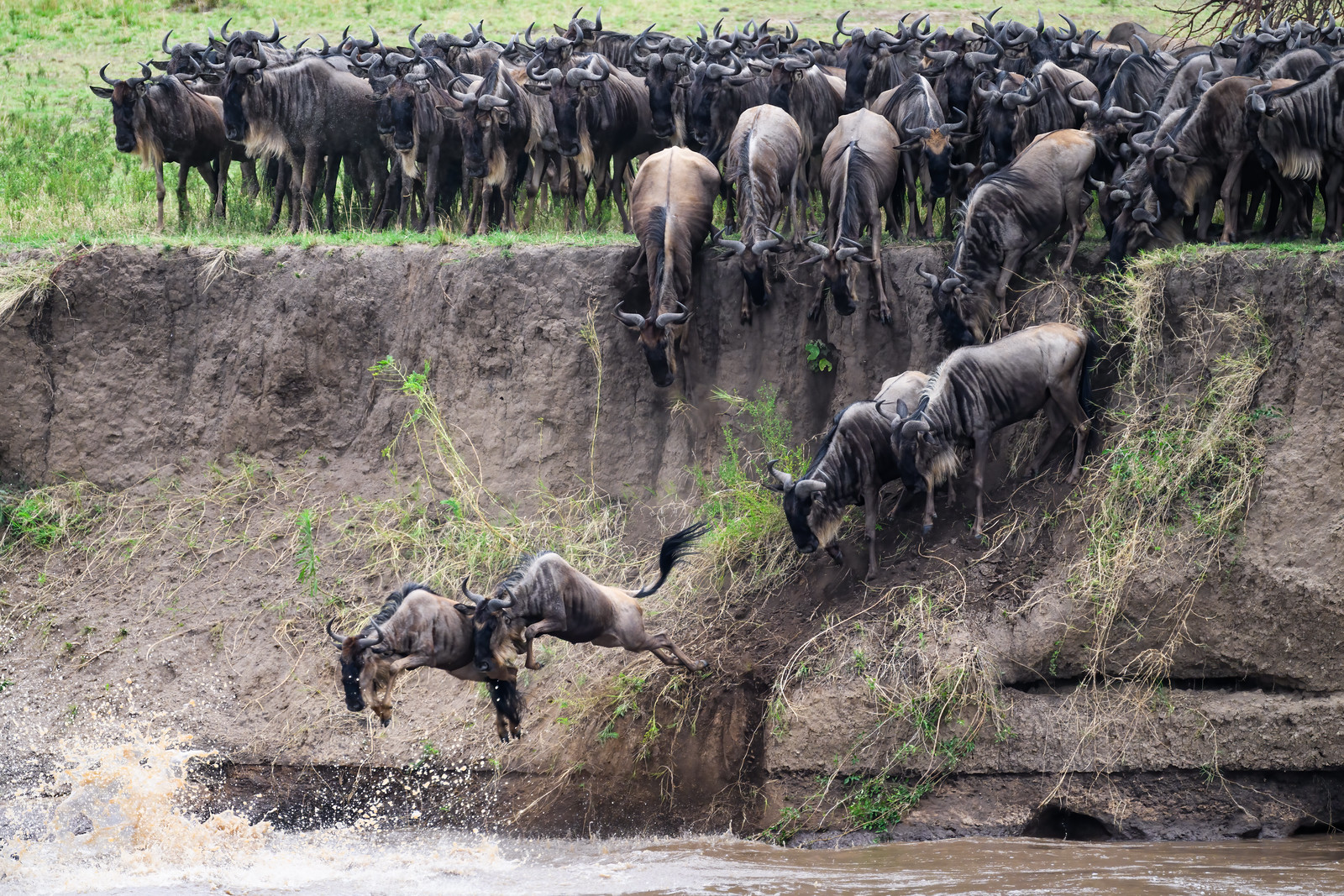
Between July and October, the migration pushes northward toward the Mara River, which forms the boundary between Tanzania and Kenya. This is perhaps the most iconic phase of the great wildebeest migration Tanzania travelers dream of witnessing, as thousands of animals plunge into crocodile-infested waters in chaotic river crossings. The tension, noise, and sheer scale of these crossings create unforgettable moments that define the migration experience. By late October and November, the herds begin their journey south again as the short rains return, completing the cycle and ensuring its continuation for another year.
Best Time to See the Great Wildebeest Migration Tanzania
Timing a safari to witness the great wildebeest migration Tanzania offers depends largely on what aspect of the migration you wish to experience. The calving season from January to February provides extraordinary opportunities to see newborn animals and predator action in the southern Serengeti, while the river crossings between July and September attract those seeking dramatic, high-adrenaline wildlife encounters. The transitional months, though less dramatic, offer quieter and equally rewarding experiences, with fewer crowds and more intimate wildlife viewing.
Because the migration is influenced by weather patterns, flexibility is key when planning a visit. Working with experienced safari operators who track herd movements can significantly increase your chances of being in the right place at the right time. Regardless of when you visit, the great wildebeest migration Tanzania delivers a constantly evolving spectacle that ensures every journey is unique.
Wildlife Beyond the Migration
While the migration is the main attraction, the Serengeti ecosystem supports an incredible diversity of wildlife year-round. Visitors can encounter large populations of African Elephant, towering Masai Giraffe, and massive herds of Cape Buffalo. The presence of these species, along with countless smaller mammals and birdlife, ensures that even outside peak migration moments, the safari experience remains rich and fulfilling. This biodiversity enhances the overall journey, offering a more complete picture of the ecosystem that sustains the migration.
Where to Stay for the Migration
Accommodation options within and around Serengeti National Park range from luxury tented camps to more modest lodges, many of which are strategically located to follow the migration’s movements. Mobile camps, in particular, offer a unique advantage, as they relocate throughout the year to remain close to the herds. Staying in such camps allows travelers to immerse themselves fully in the experience, often waking up to the sounds of wildebeest grazing nearby. Permanent lodges in key areas like central Serengeti provide consistent access to wildlife, making them ideal for those who prefer a stable base while still enjoying excellent game viewing.
Travel Tips for Experiencing the Migration
Planning a successful safari around the great wildebeest migration Tanzania requires careful consideration of logistics, timing, and expectations. Early booking is essential, especially during peak seasons, as demand for accommodations and permits can be high. Packing appropriately for varying weather conditions, bringing quality binoculars and cameras, and maintaining a flexible itinerary can all enhance the experience. Most importantly, travelers should approach the migration with an open mind, understanding that nature operates on its own schedule and that unpredictability is part of what makes the experience so extraordinary.
Why the Great Wildebeest Migration Tanzania Is Unforgettable
The great wildebeest migration Tanzania hosts is more than just a movement of animals; it is a living narrative of survival, instinct, and resilience that has played out for thousands of years. It is a reminder of the delicate balance that sustains life in the wild and the interconnectedness of ecosystems that depend on seasonal rhythms. Watching thousands of animals move in unison across the Serengeti plains, hearing the thunder of hooves, and witnessing the raw drama of predator encounters creates memories that linger long after the journey ends.
For those who seek to truly understand Africa’s wilderness, this migration offers an experience that goes beyond sightseeing. It invites you to feel the pulse of the land, to witness life in its most authentic form, and to carry those moments with you as lasting memories. In every sense, the great wildebeest migration Tanzania presents is not just a safari highlight—it is one of the greatest natural wonders on Earth.