
Serengeti Mara River Crossing: What to Expect and When to Go
 Serengeti Mara River Crossing: What to Expect and When to Go
Few wildlife experiences compare to the intensity and raw drama of the Mara River crossing Serengeti is famous for, a moment where survival instincts collide with one of nature’s most dangerous obstacles. Each year, as part of the great migration, hundreds of thousands of wildebeest and zebras gather along the banks of the Mara River in northern Serengeti National Park, hesitating, clustering, and then suddenly surging forward in a chaotic plunge into crocodile-infested waters. This is not a calm or predictable event; it is a spectacle defined by tension, instinct, and unpredictability, making it one of the most sought-after safari experiences in Tanzania. For travelers seeking to witness the most dramatic phase of the migration, understanding the timing, behavior, and expectations of this crossing is essential.
Understanding the Mara River Crossing Serengeti Phenomenon
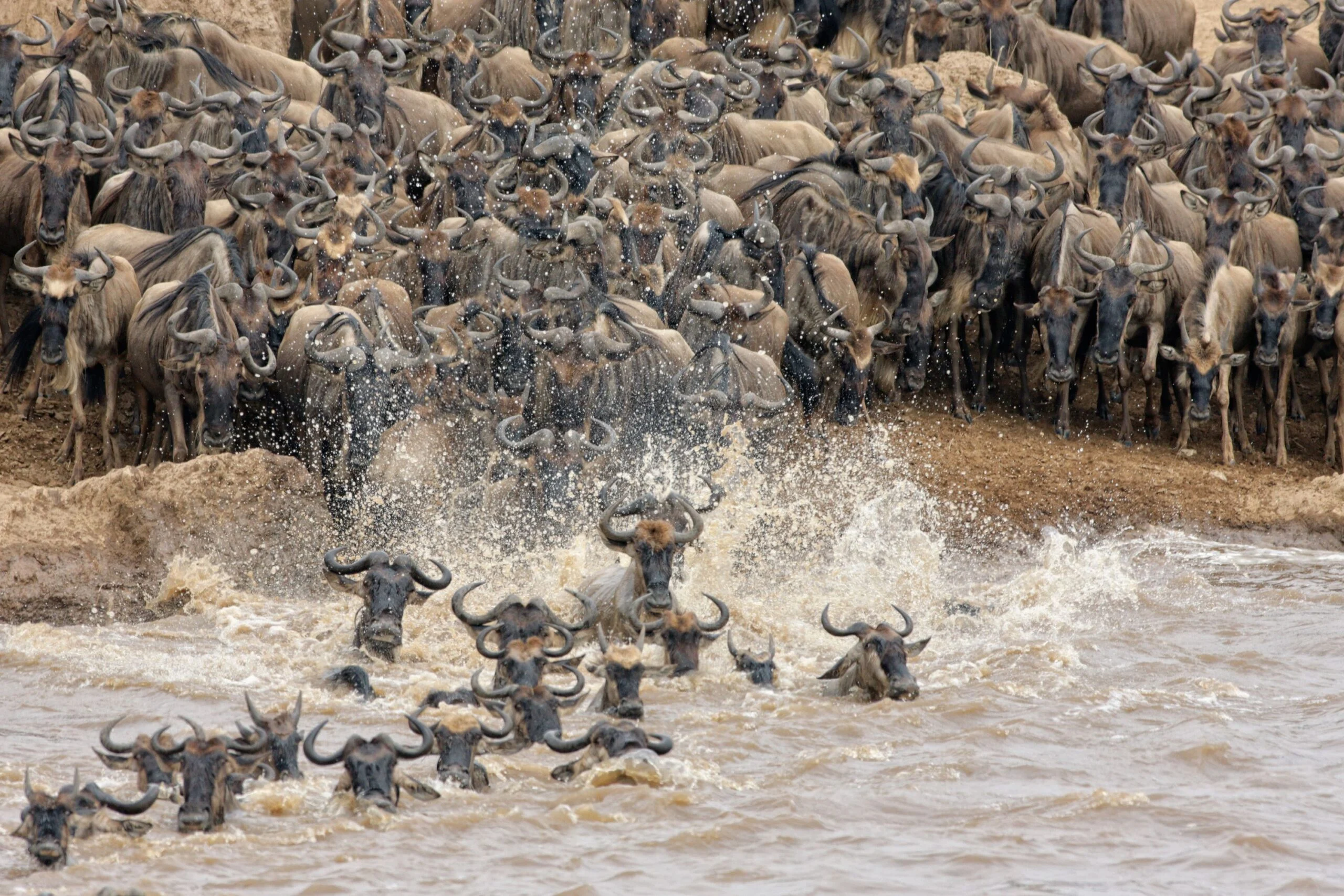
The Mara River crossing Serengeti offers is not a single event but a series of unpredictable crossings that occur as migrating herds move between Tanzania and Kenya. The river itself forms a natural barrier, forcing animals to make life-or-death decisions as they continue their journey in search of greener pastures. Wildebeest are known for their herd mentality, often gathering in massive numbers at the riverbanks for hours or even days before one animal makes the first leap, triggering a chain reaction that sends thousands into the water at once.
What makes this event so compelling is the combination of scale and danger. The strong currents of the river can sweep animals away, while large Nile Crocodile lie in wait beneath the surface, taking advantage of the chaos. On the opposite banks, predators such as Lion and Spotted Hyena often wait for exhausted animals that manage to survive the crossing. This convergence of risks creates a moment of pure natural drama that is both awe-inspiring and humbling.
What to Expect During a Crossing
Witnessing a Mara River crossing Serengeti event requires patience, as the timing is never guaranteed. You may arrive at a riverbank to find thousands of wildebeest gathered, nervously pacing and calling out, only for nothing to happen for hours. Then, without warning, the tension breaks as one animal jumps, followed by a sudden surge of movement that sends the entire herd plunging into the river. The sound of hooves, splashing water, and distressed calls fills the air, creating an overwhelming sensory experience.
The crossing itself is often chaotic, with animals pushing against each other in narrow entry points, some slipping on steep banks while others struggle against the current. It is not uncommon to see animals swept downstream or fall victim to crocodiles, while others successfully scramble up the opposite bank in a desperate attempt to rejoin the herd. These moments, though intense, are a natural part of the migration and highlight the resilience and instinct that define it. For photographers and wildlife enthusiasts, this is one of the most powerful scenes in the African wilderness.
Best Time to Witness the Mara River Crossing Serengeti
The best time to experience the Mara River crossing Serengeti offers typically falls between July and October, when the migration reaches the northern Serengeti. During this period, the herds move back and forth across the river multiple times, increasing the chances of witnessing a crossing. However, the exact timing varies each year depending on rainfall patterns, which influence the movement of the herds.
Early in the season, around July, crossings may begin in the northern Serengeti as animals approach the river for the first time. August and September are often considered peak months, with frequent crossings and large herd movements. By October, the herds may still be present, though they begin to shift direction as the short rains approach. Planning a safari during this window, with some flexibility in your itinerary, significantly improves your chances of experiencing this extraordinary event.
Where to See the Crossing
The northern region of Serengeti National Park, particularly areas near the Mara River, offers the best vantage points for witnessing crossings. Several crossing points exist along the river, each with its own characteristics, from steep, dramatic banks to wider, more gradual entry points. Experienced guides play a crucial role in locating active crossing sites, as the herds are constantly moving and may choose different locations depending on conditions.
Nearby, the river continues into the Maasai Mara National Reserve, where similar crossings occur, creating a shared ecosystem that supports one of the greatest wildlife spectacles on Earth. Whether viewed from the Tanzanian or Kenyan side, the experience remains equally dramatic, though the Serengeti side often offers a more secluded and less crowded environment.
Tips for a Successful Mara River Crossing Safari
Experiencing a Mara River crossing Serengeti safari requires more than just good timing; it also demands patience, preparation, and the right expectations. Early morning and late afternoon game drives often provide the best chances of encountering active herds near the river, though crossings can happen at any time of day. Staying multiple days in the northern Serengeti increases your chances significantly, as the unpredictability of the event means there are no guarantees.
Working with knowledgeable guides who track herd movements daily is essential, as they can position you in areas where crossings are more likely to occur. Bringing binoculars, a good camera, and maintaining a respectful distance from wildlife enhances both safety and the overall experience. Above all, understanding that the crossing is a natural event, not a staged performance, allows you to appreciate every moment, whether dramatic or quiet.
Why the Mara River Crossing Serengeti Is Unforgettable
The Mara River crossing Serengeti experience is more than just a highlight of the migration; it is a powerful reminder of nature’s unpredictability and the delicate balance that sustains life in the wild. It is a moment where instinct takes over, where survival is uncertain, and where every crossing tells a different story. Watching thousands of animals face such immense challenges creates a deep emotional connection to the natural world, leaving a lasting impression on all who witness it.
For travelers exploring Tanzania with Adventure in the Wild Safaris, witnessing this phenomenon offers not just an extraordinary safari moment, but a memory that endures long after the journey ends. It is in these moments—when the dust rises, the river churns, and the herd moves as one—that the true essence of Africa reveals itself, unforgettable and profoundly real.